Patients may need reminders about appointments, instructions about their next visit, or updates related to hospital services. When staff manage every communication manually, important messages can be delayed or overlooked.
WhatsApp can be one channel for hospital communication when used through appropriate processes, patient preferences, and privacy safeguards.
What Is WhatsApp Communication for Hospitals?
WhatsApp communication for hospitals refers to using WhatsApp to exchange relevant service-related messages with patients, where permitted and appropriate.
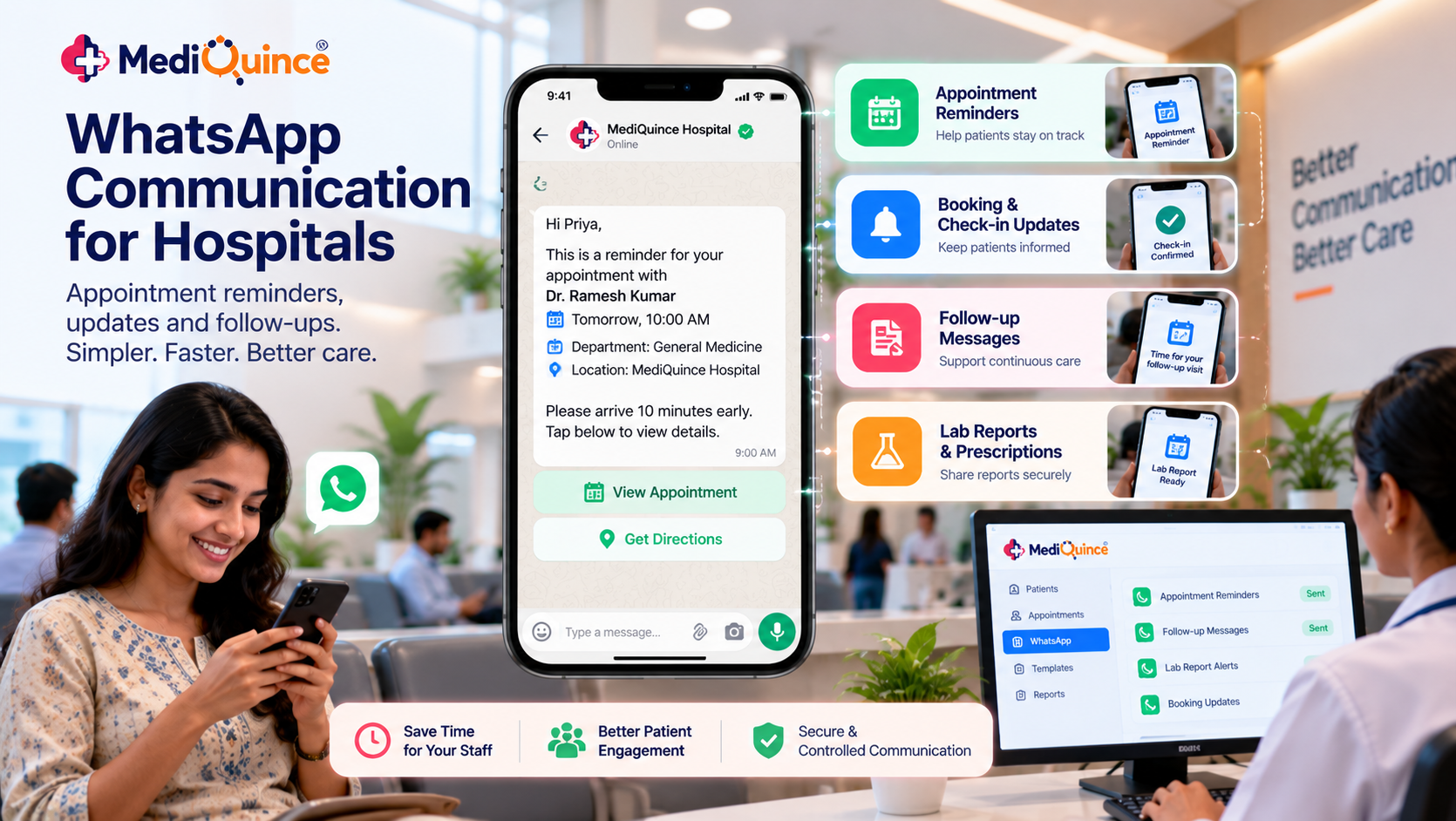
Depending on the implementation, hospital communication workflows may include appointment reminders, booking updates, follow-up messages, and other administrative notifications.
Not every WhatsApp workflow is automated. Hospitals should verify whether their chosen software supports direct integration, approved messaging templates, or manual communication.
Common Uses of WhatsApp in Hospitals
1. Appointment reminders
Patient Whatsapp reminder can help patients remember an upcoming appointment. Messages should include only the information necessary for the purpose.
2. Booking and check-in updates
Hospitals may use suitable messages to communicate booking status or provide instructions about the next step.
3. Follow-up communication
Where appropriate, hospitals can send administrative follow-up messages, such as reminders to arrange a future visit.
4. Sharing permitted information
Some workflows may support sharing prescriptions or laboratory-related information. Before using such workflows, hospitals must confirm the platform's capabilities and establish suitable access and privacy controls.
Benefits of Structured Communication
A consistent communication process can help staff organize messages, reduce repeated manual follow-up, and make service information easier for patients to receive.
Hospitals should define who can send messages, which templates are approved, and how communication preferences are recorded.
Important Privacy and Consent Considerations
Healthcare communication requires care because even a simple message may reveal sensitive information.
Hospitals should:
· Follow applicable consent and messaging requirements.
· Respect patient communication preferences.
· Avoid unnecessary sensitive medical details in notifications.
· Verify the intended recipient before sharing protected information.
· Use appropriate access controls and approved messaging processes.
· Provide alternative contact methods for patients who do not use WhatsApp.
Hospitals should also verify the relevant WhatsApp Business policies and any applicable healthcare or privacy requirements.
WhatsApp Communication in Mediquince
The Mediquince hospital solution describes WhatsApp communication for prescription and laboratory sharing, booking and check-in alerts, appointment reminders, and follow-up campaigns.
The specific messaging automation, integration, consent, and reporting capabilities should be confirmed with the Mediquince team before implementation.
Conclusion
WhatsApp can be a convenient communication channel for hospital service updates when supported by appropriate processes. A successful workflow balances convenience with privacy, consent, and accurate communication.